
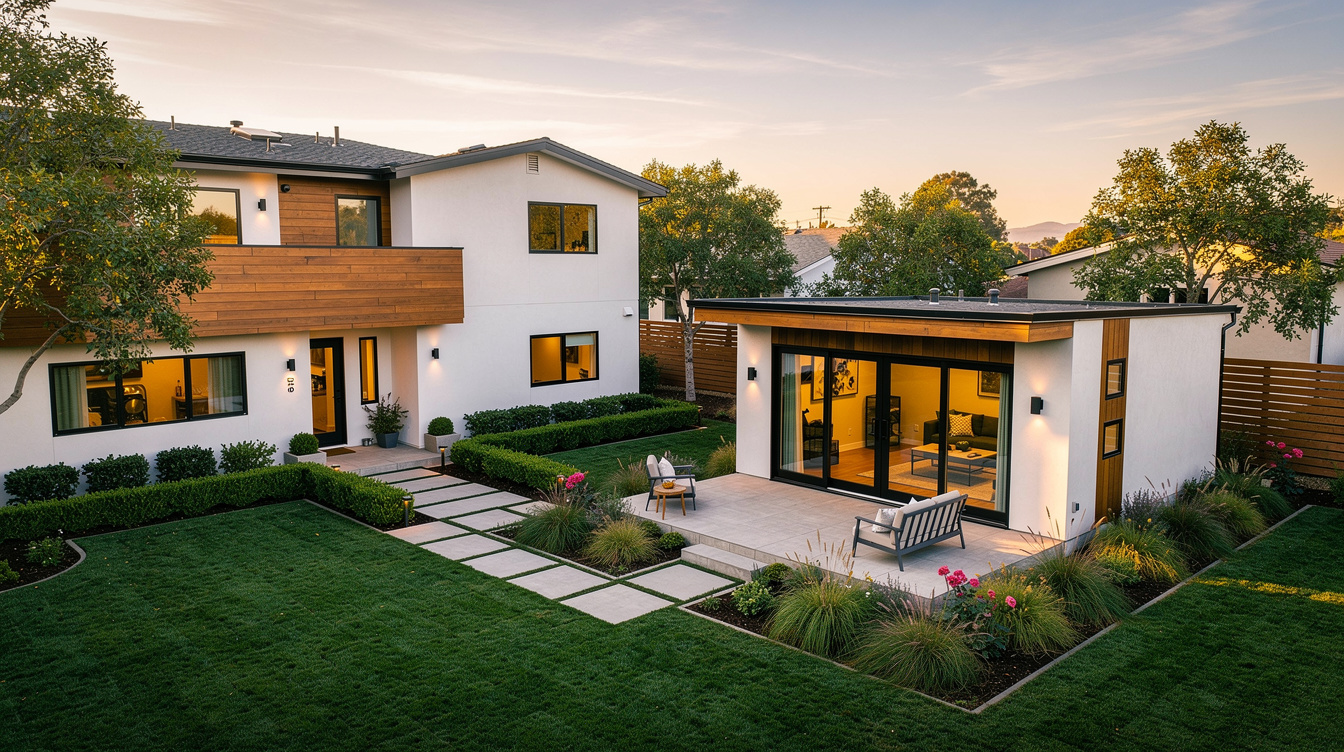
TL;DR: A California ADU built in 2026 typically costs $100,000–$400,000 and generates $1,800–$4,500/month in rent. Payback period runs 8–18 years depending on ADU type and market. Property values typically increase 20–30%. Garage conversions and high-rent coastal markets show the strongest ROI. If you're planning to stay in your home 10+ years and have a rentable lot, an ADU is very likely worth building.
What does ADU ROI actually mean?
ADU return on investment has two distinct components that most calculators fail to separate: rental income ROI (how long until rent covers the build cost) and property value ROI (how much the ADU increases what your home is worth). A complete ROI picture requires both.
Simple rental ROI formula: Total build cost ÷ annual net rental income = payback years. For example, a $180,000 garage conversion renting at $2,400/month generates $28,800/year in gross income. After basic expenses (insurance, maintenance, vacancy) at roughly 15–20%, net income is approximately $23,000–$24,000/year — a payback period of about 7.5 years.
But that ignores the property value increase. If that same ADU adds $180,000 to your home's appraised value, your total return on day one is already near 100% on paper — you've added as much value as you spent. That's why many California financial advisors consider a well-executed ADU one of the best investments available to homeowners.
Average rental income by California region
Based on California rental market data from Zillow, Apartments.com, and regional property management benchmarks for early 2026, here are realistic ADU rental income estimates by region for a well-finished 400–700 sq ft unit:
| Region | Avg Monthly Rent | Est. Annual Income (gross) |
|---|---|---|
| San Francisco Bay Area | $3,000 – $4,500 | $36,000 – $54,000 |
| Los Angeles / West LA | $2,500 – $3,500 | $30,000 – $42,000 |
| Orange County | $2,400 – $3,200 | $28,800 – $38,400 |
| San Diego | $2,200 – $3,000 | $26,400 – $36,000 |
| Sacramento Area | $1,800 – $2,500 | $21,600 – $30,000 |
| Inland Empire (Riverside/SB) | $1,500 – $2,200 | $18,000 – $26,400 |
| Central Valley (Fresno/Bakersfield) | $1,200 – $1,800 | $14,400 – $21,600 |
These figures assume a long-term tenant in a permitted, code-compliant unit. Short-term rental platforms (Airbnb/VRBO) can yield 40–60% more in coastal and tourist markets but come with significantly more management overhead and local regulations.
Payback period by ADU type
Payback period varies dramatically by ADU type. The lower your build cost and higher your local rents, the faster you recoup your investment. According to California HCD data and industry cost guides, here's how the math typically looks for 2026:
| ADU Type | Typical Cost Range | Avg Monthly Rent (CA) | Est. Payback Period |
|---|---|---|---|
| JADU / Interior Conversion | $30,000 – $80,000 | $1,200 – $1,800 | 3 – 6 years |
| Garage Conversion ADU | $90,000 – $180,000 | $1,800 – $2,800 | 5 – 9 years |
| Attached ADU | $150,000 – $300,000 | $2,000 – $3,200 | 8 – 13 years |
| Detached ADU (site-built) | $225,000 – $450,000 | $2,200 – $4,000 | 10 – 18 years |
| Prefab / Modular ADU | $150,000 – $280,000 | $2,000 – $3,500 | 7 – 13 years |
Payback calculations above use gross rent. Deduct roughly 15–25% for vacancies, maintenance, insurance, and property management if applicable. In high-rent markets, payback accelerates significantly — a $200,000 garage conversion in the Bay Area at $3,200/month gross pays back in under 7 years net of expenses.
Want help figuring out which ADU type fits your budget? See our construction guide and compare prefab ADU options.
How an ADU increases your property value
Property appraisers in California typically value ADUs using an income approach — meaning the appraised value increase is directly tied to the rental income the unit can generate. A unit renting for $2,400/month in a market with a 5–6% cap rate adds approximately $480,000–$576,000 in income-stream value, though this gets blended with the overall property comparables.
In practical terms, California real estate data consistently shows:
- A well-built ADU adds 20–30% to home value in most California markets
- Bay Area ADUs have documented value increases of $200,000–$350,000
- LA and San Diego markets show typical increases of $150,000–$250,000 for detached units
- Even a well-executed garage conversion often adds $100,000–$175,000 in appraised value
Importantly, the value increase often equals or exceeds the construction cost — meaning the ADU pays for itself in equity before it generates a single dollar of rent. This is why many California homeowners consider an ADU as much a wealth-building strategy as an income strategy.
For ADU financing purposes, this equity increase is critical — it enables HELOCs, cash-out refinances, and ADU-specific loan products that can make the project self-funding from day one.
Hidden costs that eat into ROI
The gap between a projected 10-year payback and a real 15-year payback usually comes down to costs that weren't in the original budget. Based on patterns from California ADU projects, here's what most underestimates miss:
- Utility upgrades: A separate electrical meter, panel upgrade, or sewer lateral can add $15,000–$40,000
- Site work and grading: Sloped lots, drainage issues, and access constraints can add $20,000–$60,000
- Design and permitting: Architect, structural engineer, Title 24 compliance, and permit fees often run $15,000–$35,000 before a nail is driven
- Financing costs: Construction loan interest, origination fees, and draw fees on a 12–18 month build add 2–4% to total project cost
- Vacancy and turnover: Budget 5–10% annual vacancy (roughly 3–6 weeks/year) and $1,000–$3,000 in turnover costs per tenancy change
- Landlord expenses: Insurance rider, property management (8–12% of rent), maintenance reserves ($100–$200/month) all reduce net income
- Tax implications: Rental income is taxable; consult a CPA about depreciation schedules, passive activity rules, and property tax reassessment risk
A conservative total-cost approach: add 15–25% to your contractor's base bid to arrive at a realistic all-in budget. Then use 80% of gross rent to estimate net income after expenses. Run your payback math on those numbers.
When building an ADU is NOT worth it
ADUs are not a universal slam dunk. Here are the scenarios where the math often doesn't work:
- You're planning to sell in under 5 years. The build cost, financing charges, and transaction friction mean you likely won't recoup full project cost at sale unless you're in a very high-value coastal market.
- Your lot has severe site constraints. A steep slope, setback issues, easements, or problematic soil conditions can push all-in costs above $500,000 where ROI becomes marginal even in premium markets.
- Your local rents are low. In Central Valley markets where ADU rents max out at $1,200–$1,400/month, a $200,000+ detached ADU may take 20+ years to pay back through rent alone.
- You can't handle the landlord role. Being a landlord — even with a good tenant — involves real obligations. If you're not prepared for that or willing to pay for management, factor that reality into the ROI calculation.
- You're using high-cost debt. If you're financing at 9–12% interest on a construction loan with no clear path to refinancing, the carrying costs can erode ROI significantly in the first 3–5 years.
Bottom line: who should build an ADU in 2026?
Building an ADU in 2026 makes strong financial sense if you fit this profile:
- You plan to own your home for 10+ years
- You're in a coastal or high-rent California market (Bay Area, LA, OC, San Diego)
- You have a feasible lot — reasonable access, minimal grading, existing utilities
- You have access to low-cost financing (HELOC, cash-out refi, ADU-specific loan under 7%)
- You want to house a family member and capture value in the unit regardless of rental income
- You're comfortable being a landlord or hiring management
The highest-ROI path in 2026: garage conversion in a high-rent market. Lower build cost, faster permitting in most California cities, and strong rental demand make this the most efficient ADU investment available. See our complete guide to ADU construction for what to expect from the build process, or explore prefab ADUs for a faster-to-market alternative.
According to California HCD's most recent ADU data, permits for ADUs surpassed 24,000 statewide in 2023, reflecting strong homeowner confidence in ADU ROI — and that number has continued climbing as state permitting reform continues to make approvals faster and cheaper.
Ready to run the numbers on your property?
Get matched with a vetted California ADU contractor who can give you a real project estimate — not a ballpark from a blog post.
Find My ADU Contractor →